videoSeptember 19, 2026
Seedance vs Hailuo vs Kling: which AI video model is best in 2026?
Compare exact Seedance, Hailuo and Kling variants by task. Watch two real same-input clips, inspect their prompts and costs, and see the limits of this comparison.
For a short, silent photo animation like our example, start by testing Seedance 2.0 Fast; consider Kling v3 Pro when you need its multi-shot or subject-reference controls, and Hailuo 2.3 Standard for a simple six- or ten-second image animation. Those are task-based starting points, not a universal quality ranking. Our evidence includes two actual same-input videos and a documentation comparison for Hailuo. It does not establish which model is best across faces, action, products and every other video task in 2026.
Original generated illustration, not model output. The actual videos are below. Specifications checked September 19, 2026.
Which exact models are being compared?
“Seedance,” “Hailuo” and “Kling” name model families. A useful comparison names the version, tier and task endpoint.
| Variant | Documented controls relevant here | Evidence on this page |
|---|---|---|
| Seedance 2.0 Fast, image-to-video | 4–15 seconds or automatic duration; 480p/720p settings; optional end image and generated audio | Actual five-second silent output |
| Hailuo 2.3 Standard, image-to-video | 768p endpoint; 6 or 10 seconds; prompt optimizer enabled by default | Documentation only; no rendered sample |
| Kling v3 Pro, image-to-video | 3–15 seconds; optional end image, multi-shot prompts, elements and generated audio | Actual five-second silent output |
These controls come from the provider's Seedance schema, Hailuo schema and Kling schema. They describe these endpoints, not every version of each family. This is a comparison of selected available variants, not a claim that these are the newest releases from each company.
Watch the same photo animated by two models
Both runs use the same original Lake McDonald photograph by Ryan Hagerty/USFWS, marked public domain by its source. We supplied the same image bytes and the same motion prompt. Original source and credit.
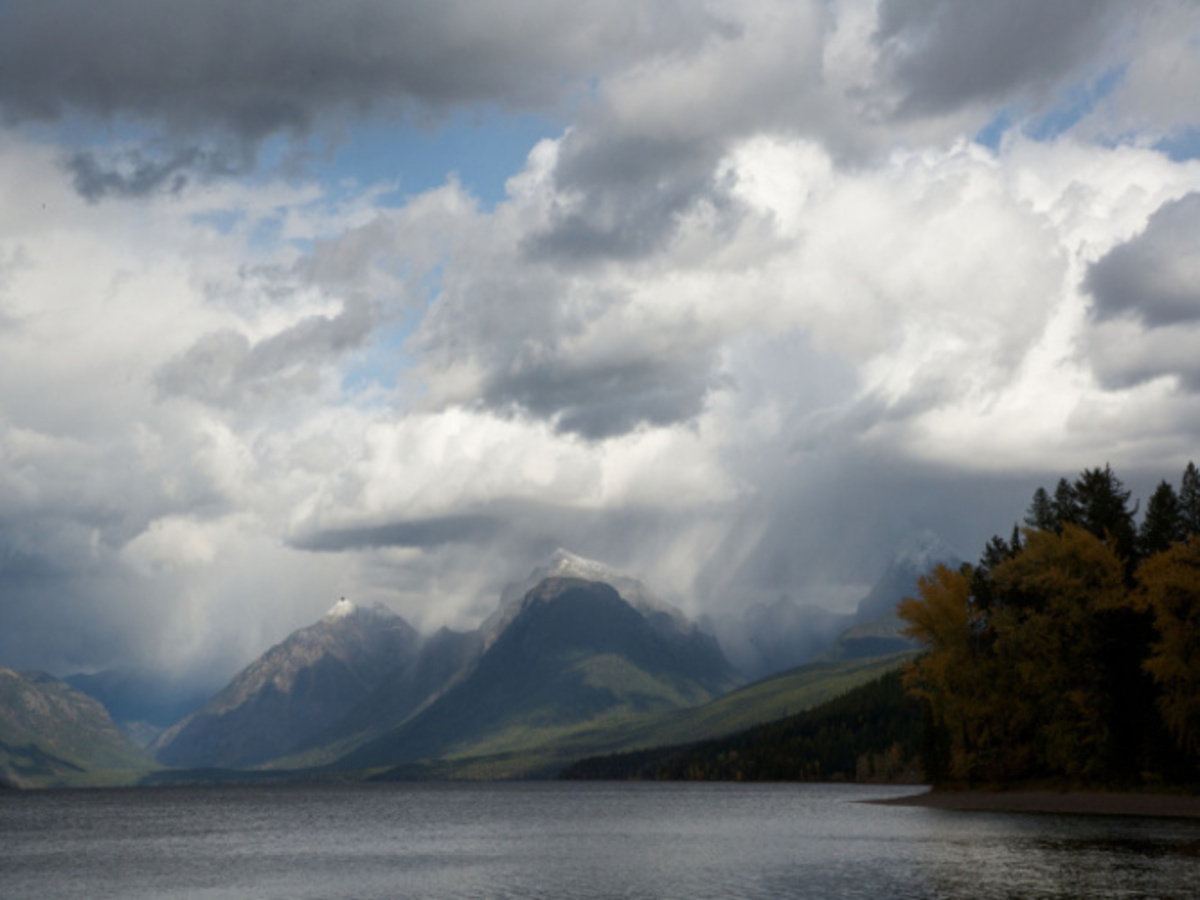
The brief asked for a locked camera, gentle lake ripples and subtle cloud drift, with the mountains and shoreline kept still. The complete motion prompt is available to copy.
Seedance 2.0 Fast
This is the existing September 16 run from our photo-to-video walkthrough, reused here without re-encoding. Its measured output is 5.04 seconds, 1,112 × 834 pixels, 24 fps and no audio stream. The recorded generation charge was USD 1.35. Request and settings; actual result.
Kling v3 Pro
The September 19 run produced 5.04 seconds, 1,660 × 1,244 pixels, 24 fps and no audio stream, with an observed generation charge of USD 1.85. Request and settings; actual result; measured metadata.
Both clips invent motion. They are not documentary footage, and the source agency did not create or endorse them. The native output dimensions differ, so this is also not a resolution-controlled benchmark. Watch the shoreline, mountain edges and cloud shapes against the input rather than treating a larger frame as proof of better fidelity.
Where is the Hailuo sample?
There is no Hailuo render in this article. We verified its documented controls but did not run that endpoint through the available Vaaya setup. Its empty fields in the comparison worksheet mean not measured, not zero quality. A three-way quality winner would require a third sample and more than one trial per model.
Which should you try for your task?
For a modest landscape animation, my first experiment would be Seedance 2.0 Fast with the published prompt. It produced a usable file at the lower observed generation charge in these two runs. That is a workflow recommendation based on this example, not evidence that Seedance is always cheaper or visually better.
For a shot that needs several subjects or explicit shot structure, inspect Kling's documented element and multi-shot controls. A supported control is a reason to test a model; it is not proof that the result will follow every instruction.
For a straightforward six- or ten-second image animation, Hailuo 2.3 Standard is another candidate. Record whether its prompt optimizer is enabled before comparing results, because that setting is part of the experiment.
For faces, family photographs or products with exact lettering, run a small evaluation using representative inputs. Our mountain scene says little about facial likeness, hands or text preservation. The family-photo article shows why generated movement should be treated as interpretation.
How should an agent run a fair comparison?
Keep the source image and creative brief fixed. Match duration, audio policy and intended framing where the endpoints allow it; record unavoidable differences. Save every request and original output, including failed attempts. Run several samples before scoring stability or prompt adherence.
Judge the things the video must get right: the subject stays recognizable, the requested movement happens, forbidden changes do not appear and the result fits the delivery format. Track the total cost of accepted clips, including reruns. A cheap first attempt can become an expensive workflow if it repeatedly misses the brief.
The evidence notes explain the limits of our two runs. No rendering-speed comparison or numerical visual-quality score was measured.
How does Instinct × Vaaya make this useful?
With Instinct on WhatsApp or iMessage, a useful instruction would be: “Try these two models on this photo with the same motion. Stay within my budget and send both videos with their costs.” Where the relevant tools are connected, Instinct can manage the conversation and Vaaya can supply the external generation calls.
Our two generation examples did run through Vaaya, but they are not a captured Instinct session. Ask the agent to check the current model names and quotes before starting, retain each job ID while it renders and return the actual files. The comparison becomes useful when you can watch the candidates yourself.
Questions
Which is best in 2026: Seedance, Hailuo or Kling?
There is no demonstrated universal winner in this comparison. For our short silent landscape workflow, Seedance 2.0 Fast is the first option to try because its recorded generation cost was lower. Kling v3 Pro is worth testing when its multi-shot and element controls matter. Hailuo 2.3 Standard is a candidate for a simple six- or ten-second image animation. Test the exact variants on your own material.
Did you test all three models with the same image?
We generated Seedance 2.0 Fast and Kling v3 Pro clips from the same photo and motion prompt. Hailuo 2.3 Standard is compared from its provider documentation only. We did not render a Hailuo sample or score it.
Are these the latest models from each company?
This article compares named API variants, not every release or a guaranteed latest-model lineup. Check current availability, version, input requirements and price before running a new job. A brand name alone is not a reproducible model choice.
Does higher output resolution mean better AI video?
No. Resolution measures the size of the output frame. Subject stability, prompt adherence, motion, artifacts and audio quality need separate inspection. The two actual outputs here have different native dimensions.
Can I compare price from the recorded charges?
The recorded generation charges were USD 1.35 for Seedance and USD 1.85 for Kling. They describe these particular calls, not current quotes, total workflow costs or the cost of getting an acceptable result after retries.